
In Prince George in June daytime highs reach a pleasant 20 degrees, people stroll about in T-shirts, and the snow begins to fly. A flurry of white fluff containing billions of tiny black cottonwood seeds drifts down from the sky.
“The air is just filled. The seeds cover everyone’s cars. It’s in town. It’s everywhere,” says Jeff Werner, a wildlife ecologist with British Columbia’s Ministry of Water, Land and Resource Stewardship and an adjunct professor at the University of Northern British Columbia.
But year after year, a disquieting number of cottonwoods haven’t taken root as they once did, despite the incongruous snow of seed each June.
Werner began to ask why several years ago after a trip to the fittingly named Cottonwood Island Park, which lies at the confluence of two great rivers, the Fraser and the Nechako.
The park is a popular destination for Prince George residents wanting to commune with nature. It is populated by woodpeckers so tame they can be hand-fed, nuthatches, black bears, owls, bats and all manner of migratory songbirds such as western tanagers and orange-crowned warblers that fly to Central America in the fall and wing back north every spring.
All those species and more are there because of the park’s signature tree, which is at its full beauty in a gentle breeze, wrote the late U.S. nature writer and botanist Donald Culross Peattie. “For on one side the leaf blades are darkly glittering, on the other almost silvery white.... The trees seem, like the sea, to break into whitecaps before the wind.”
Several years ago, Werner was walking in the park with retired soil scientist Paul Sanborn, a colleague from UNBC. As they walked, Sanborn pointed out something odd. The park’s old, gigantic cottonwoods dominated the forest, yet beneath the giants no young cottonwoods could be found.
The forest floor was, instead, dominated by native spruce trees.
“We were looking at the forest and realizing that although not appearing to change from year to year, it was actually in a rapid state of flux,” Werner recounts.
The park appeared in danger of eventually losing “its namesake, singular tree.” And not just there, but all along the Nechako.
Why, Werner asked, were the giant trees producing so much seed, yet the seeds weren’t germinating? His quest ended with a momentous decision to plant half a million cottonwood seedlings along the Nechako River to stave off an ecological crisis in the making.
A river stuck in reverse
In field trips, the restless ecologist concluded that the dearth of young cottonwoods spoke to a bigger problem: a radically altered river that no longer behaved as it once had.
Unlike the Fraser, the Nechako was breached by a dam 72 years ago. The 100-metre-high edifice known as the Kenney Dam transformed nature to provide hydro power to make aluminum in the distant coastal community of Kitimat.
“The dam effectively reversed the river’s flow, sending two-thirds of its volume back toward the Coast Mountains and the hydroelectric turbines buried within them,” The Tyee’s Amanda Follett Hosgood reported a few years ago, in a story that looked at the dam’s lasting impacts on First Nations.
Caught in the crosshairs was the river valley’s signature tree.
For thousands of years, the First Peoples occupying the Nechako watershed had an intimate connection with cottonwoods. Like their coastal counterparts who sculpted ocean-going canoes out of massive red cedar logs, they exploited the soft wood of equally massive cottonwoods to make river-going dugout canoes and so much more, ethnobotanist Nancy Turner writes in her monumental two-volume work, Ancient Pathways, Ancestral Knowledge.
They also gathered and ate fresh or dried cottonwood mushrooms that grew beneath their namesake trees, kindled fires using sections of extremely dry cottonwood, used cottonwood resin to make salves for cuts and sores or to ease the discomfort of teething babies and those suffering from toothaches, and used the tree’s leaves to draw out infections.
But most important of all was the tree’s association with fish.
On the banks of the river where the cottonwoods grew, First Peoples established village sites and built weirs in the river to channel and selectively catch sockeye and chinook salmon near where the fish spawned.
Those selective fisheries allowed individual salmon runs to perpetuate generation after generation and sustained village populations far in excess of what they are today, until the advent of open-ocean, non-selective and indiscriminate fisheries began to unravel all of that.
Rivers dammed are rivers tamed. And rivers tamed prove disastrous for all manner of life.
When undammed rivers overflow their banks, new stream channels are created and existing river banks are recontoured. The freshly disturbed ground becomes prime habitat for seeds to germinate, so much so that even a novice is likely to see the differences.
“What we discovered was that wilder river systems — the Fraser, the Bowron, the McGregor — have more than 100 smaller cottonwood trees for every single large veteran. But in the Nechako, the ratio is often less than one to one. You can see it with the naked eye,” Werner says.
By severing the Nechako, the then-Aluminum Co. of Canada (now Rio Tinto Alcan) got the massive amounts of electricity and water it needed to make aluminum, but robbed the river of its dynamism. Cottonwoods were stymied, and so were the human and wildlife communities who co-evolved with them.
Werner believes that as long as the dam remains in place, some kind of intervention is necessary to ensure that cottonwoods persist along the Nechako. And that intervention will have to be everywhere that cottonwoods are presently found, which is in pockets all along the river from the dam east to Cottonwood Island Park, a distance of some 245 kilometres.
“I take a rather dim view of restoration projects that look more like gardening experiments,” Werner says. If the scale of altered landscapes is vast, “then you need to also approach the solutions on very large scales.”
Since the trees produce plenty of seeds but the seeds are not germinating where they once did, cottonwoods will need to be planted by the hundreds of thousands — something that has never before been attempted in B.C. At least not with cottonwood, a tree species that has historically been treated much like a weed by the province’s forest industry, which feasts primarily on prized spruce, fir, pine and cedar trees.
Given that most of the planting sites for cottonwoods would be on or not far from the river’s banks and that large stretches of the Nechako and its tributaries are accessible only by boat, planting an estimated half a million such trees posed obvious challenges.
The fish’s friend
When Werner speaks about cottonwoods he warms to the subject quickly, much like the trees themselves grow.
“Black cottonwood is B.C.’s fastest-growing tree. It’s not uncommon for a young sapling to put on two metres of vertical growth in a year. So they get big and they also get tall. And by tall, I’m talking 150 feet or more,” Werner says. “They also get burly, so they’re often over a metre and a half in diameter.”
The crowns of the trees are also enormous. That’s important, Werner says, because it translates into lots of shade both on the riverbank and out into the river itself. The shade means that young resident juvenile salmon are shielded somewhat from the sharp eyes and talons of predators such as osprey and eagles.
The trees also help to feed resident fish. “We know that cottonwood leaves are one of the most important high-quality forms of leaf litter to a stream,” Werner says. “And there’s an entire food web of insects that help break down a cottonwood leaf, starting with the little shredders that eventually turn those leaves into food for young juvenile salmon.”
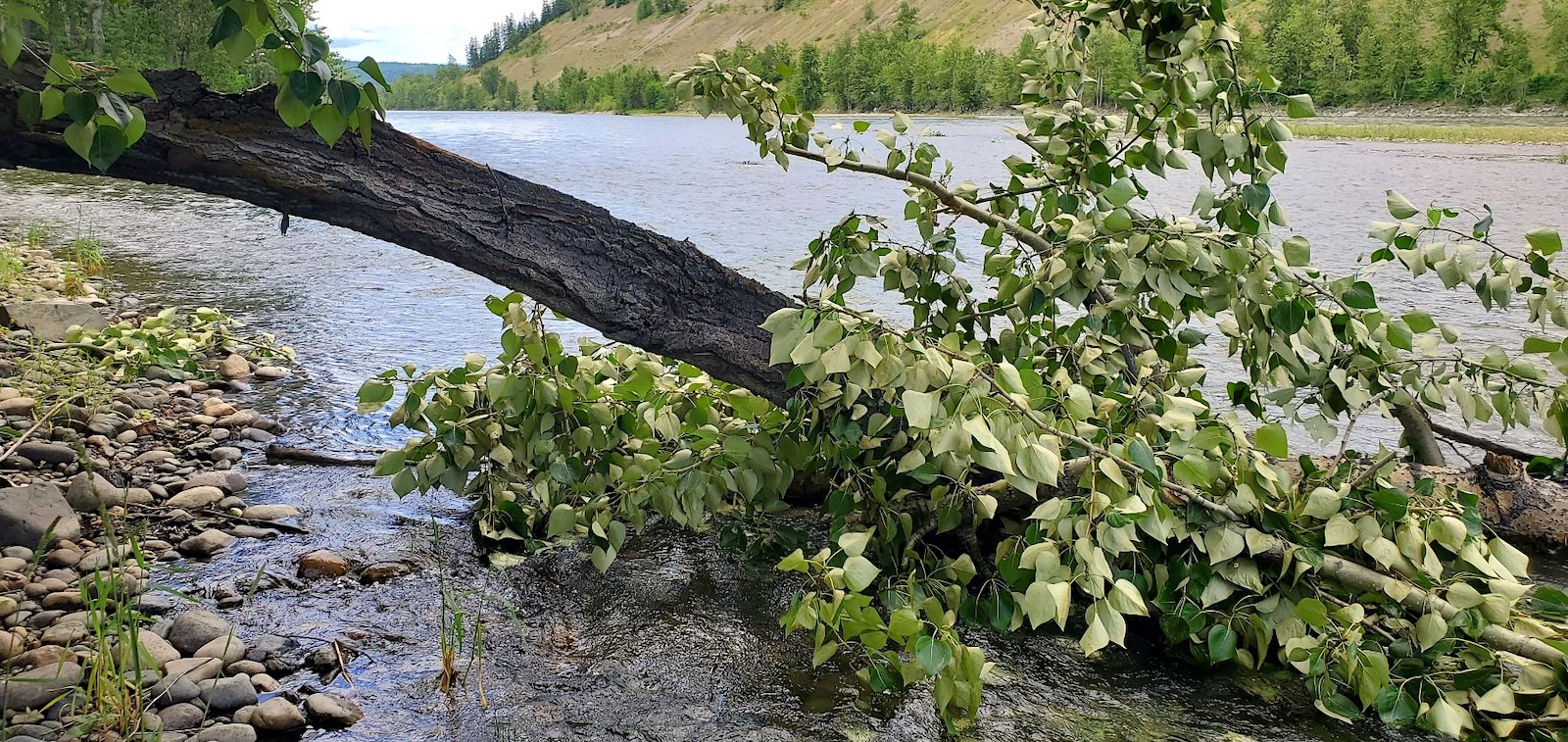
Such benefits extend out for decades and even centuries. Werner recalls how when one giant cottonwood fell across a nearby roadway, it had to be cut up to be cleared away. When it was, people counted 380 tree rings, one for each year of the tree’s life. While most cottonwoods might live half as long, that is still a lot of time for a tree to stand and provide the benefits it does to the web of life all around it. And the giving continues long after the trees die.
When a cottonwood falls from a river’s bank into the water, it alters stream flows, creating deep pools of still water for the fish to inhabit.
Coming home
Ecologists have a term for plants and animals that play outsize roles in ecosystems: keystone species. Cottonwoods are one of them.
The trees are condominiums of a sort, home at one time or another to a spectacular diversity of bird, mammal and insect life.
When a branch falls from a cottonwood, a cavity eventually forms as a result of fungi colonizing the site or a pileated woodpecker or some other tree-boring bird coming along and excavating a hole in the wound and the inner tree’s soft wood.
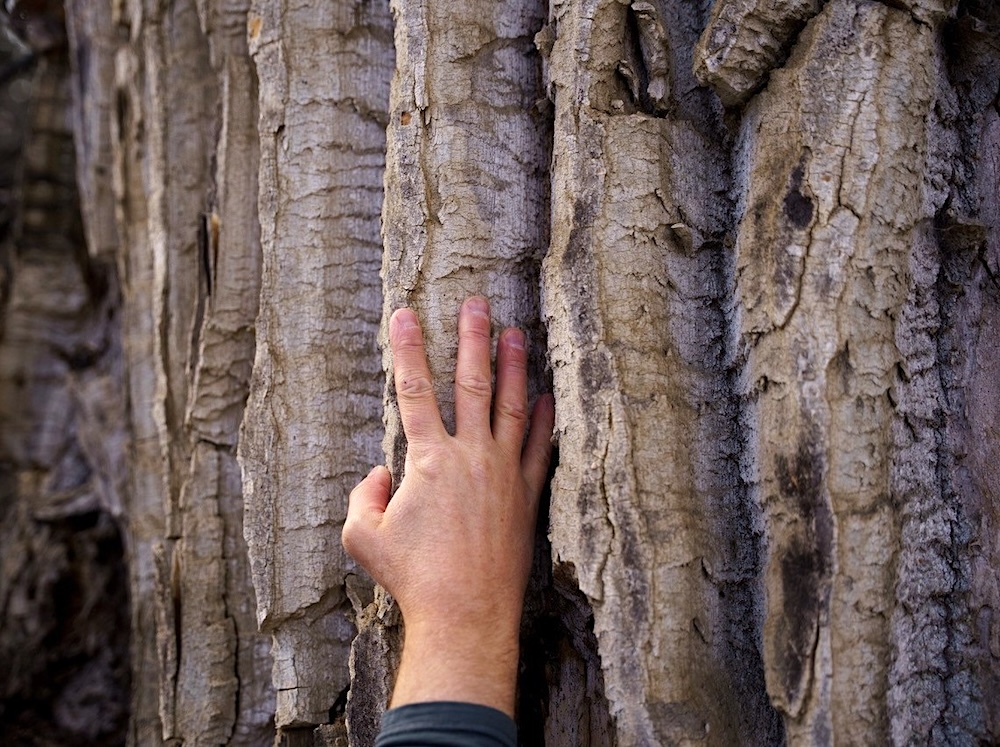
Up to one-quarter of B.C.’s forest-dwelling mammals, including squirrels, martens and endangered fishers, use such cavities for homes, as do myriad songbirds and ducks. In addition to the hollowed-out holes, the thick, deeply fissured bark of the trees provides an unusual roosting habitat.
“With a pair of binoculars on a hot sunny day, it’s not uncommon to see bats wedged into those crevices. And if you come back and revisit that same tree at 11 o’clock, 2 o’clock, 4 o’clock, you’ll see that the bats actually reposition themselves to stay either in the shade or the sun depending on the temperature of the day at hand,” Werner says.
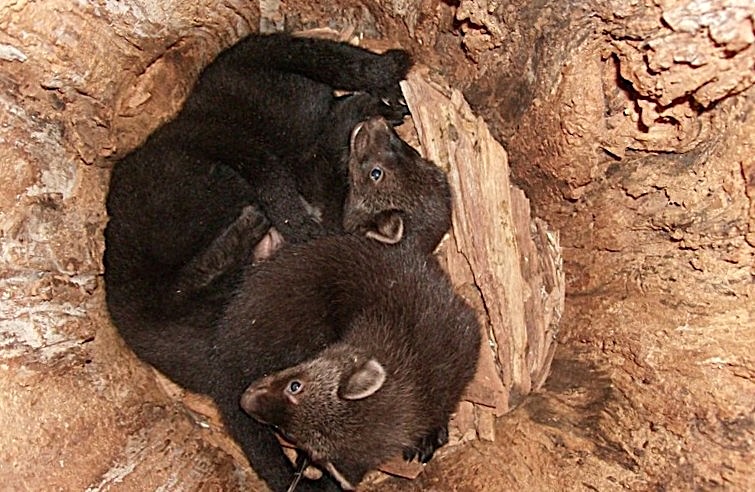
Werner also recounts a story of a large cottonwood on the Salmon River, about a half-hour’s drive from his home. The top of the giant tree came down at some point, perhaps during a heavy wind. Left behind was a large cavity in the severed tree trunk some 20 metres above the forest floor. Eventually, it was discovered by a black bear who found its floor space ideal for a hibernation chamber.
“If you get lucky, you can sometimes see that black bear — I’ve seen this twice now — in the top of the tree in the early spring with its front paws and shoulders hunched over the lip, just groggily looking around,” Werner says.
Far more common are bears that den in the hollowed bases of such trees. If you happen to be snowshoeing in the winter in a forest where cottonwoods are found, you can tell if a bear may be hibernating below by the presence of a small opening in the snow near the base of the tree. The hole is an airway leading to the bear’s den. The tunnel’s walls will be glazed in a glistening layer of ice crystals, formed as the water vapours from the sleeping bear’s breath condense.
How to plant half a million trees?
It was one thing to realize that a massive, river-long planting program might be required to stave off the demise of the Nechako’s cottonwoods. It was quite another to figure out the logistics of doing so.
Early on, Werner thought the best way to re-establish a new generation of cottonwoods would be to take tiny, pencil-thin cuttings from the trees and sink those cuttings into the ground. But growing trees in the field vegetatively didn’t show much promise, nor did raising the cuttings in tree nurseries.
So that left working with the seed itself.
Along with their super-fast growth and outsize ecological importance, cottonwoods are dioecious, meaning that individual trees are either strictly male and produce pollen or strictly female and produce seed.
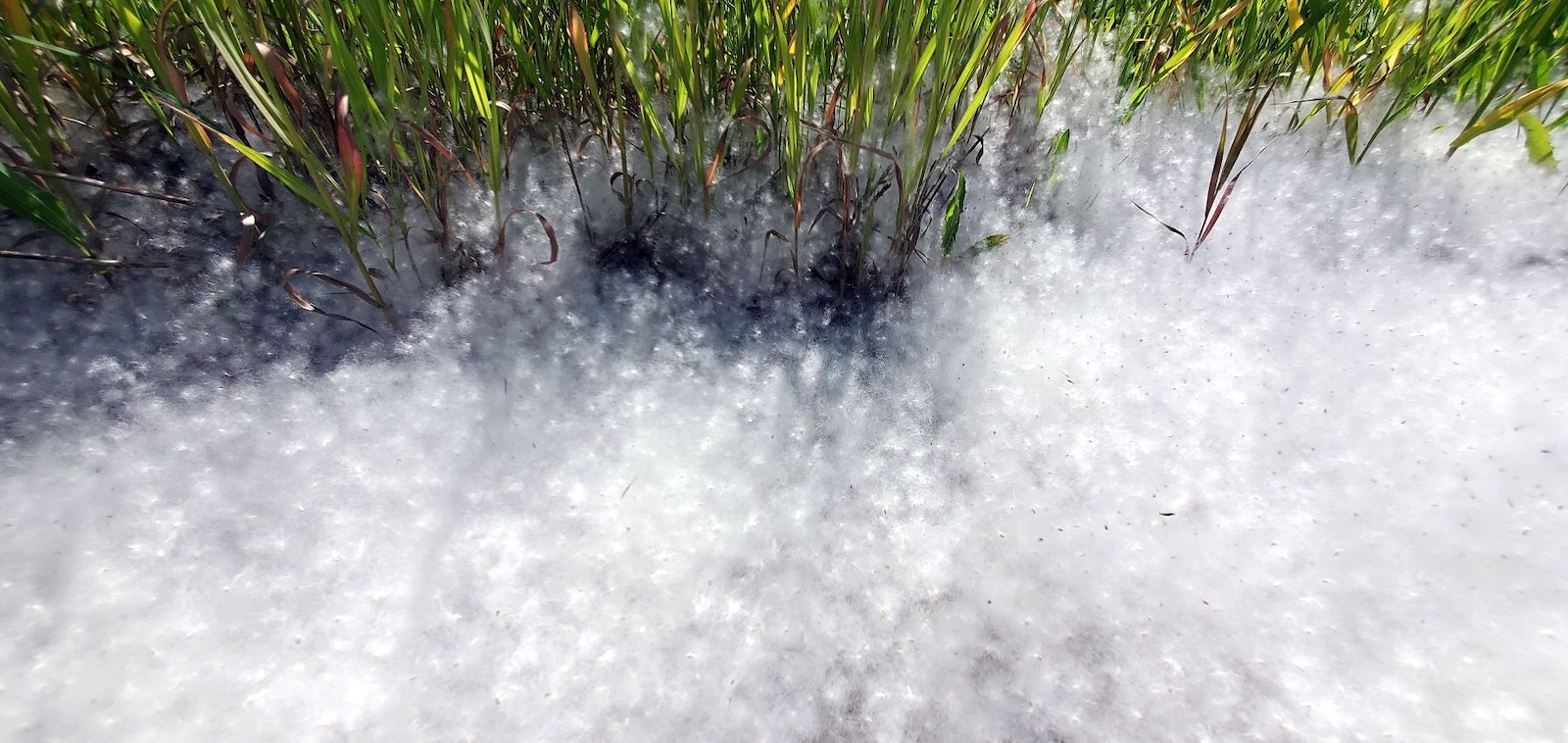
It is estimated that a single, mature, female cottonwood may produce 25 million seeds, with some scientists believing the upper limit is twice that.
The seeds are tiny, often under a grain of sand in size. Thanks to the white, cottony fluff they are entrained in, they can be carried by the wind great distances from their trees of origin. But once they alight on the ground, they have only a matter of days to germinate.
This, in a nutshell, is the cottonwood’s survival strategy: produce an astonishing number of seeds and prodigious quantities of snowy fluff to carry them, and rely on the wind to disperse the white mass far and wide in the hope that a tiny percentage of seeds will find an ideal patch of wet ground to germinate in. On the banks of the tamed Nechako, that tiny percentage has shrunk further still.
Once Werner realized that seeds would need to be collected to do the job, he hit on the idea of gathering up unopened seed pods from the forest floor.
“I was picking them up, filling a garbage bag, thinking this was great. I didn’t realize until later that they were all on the ground because red squirrels were climbing those trees and clipping them before they had fully matured,” Werner recalls. The squirrels would then cart those pods off and store them to eat in the winter; that is, if the black bears didn’t take advantage of the squirrels’ handiwork and grab them first.
But the seed pods were immature, and Werner had no success germinating them. “I had thought the squirrels were doing me a solid, but they weren’t.”
Werner eventually learned that the pods had to be collected directly from the trees themselves just before they were ready to burst open and release their holds. The seeds then ended up being grown out at a tree nursery in the village of Telkwa, near Smithers, or a second nursery outside of 100 Mile House.
‘For the land’
A project at such scale would be impossible without a committed team. Werner says members include biologists and colleagues who work with him at the ministry. There’s also the Society for Ecosystem Restoration in Northern BC, a non-profit that stickhandled getting the first major phase of tree-planting done this past season. Prior to that, Werner planted thousands of cottonwood seedlings himself.
The provincial Ministry of Forests is also now involved. It receives, cleans, dries and stores the collected seeds, as well as conducting germination tests to ensure that the best seeds get to the nurseries as seed stock.
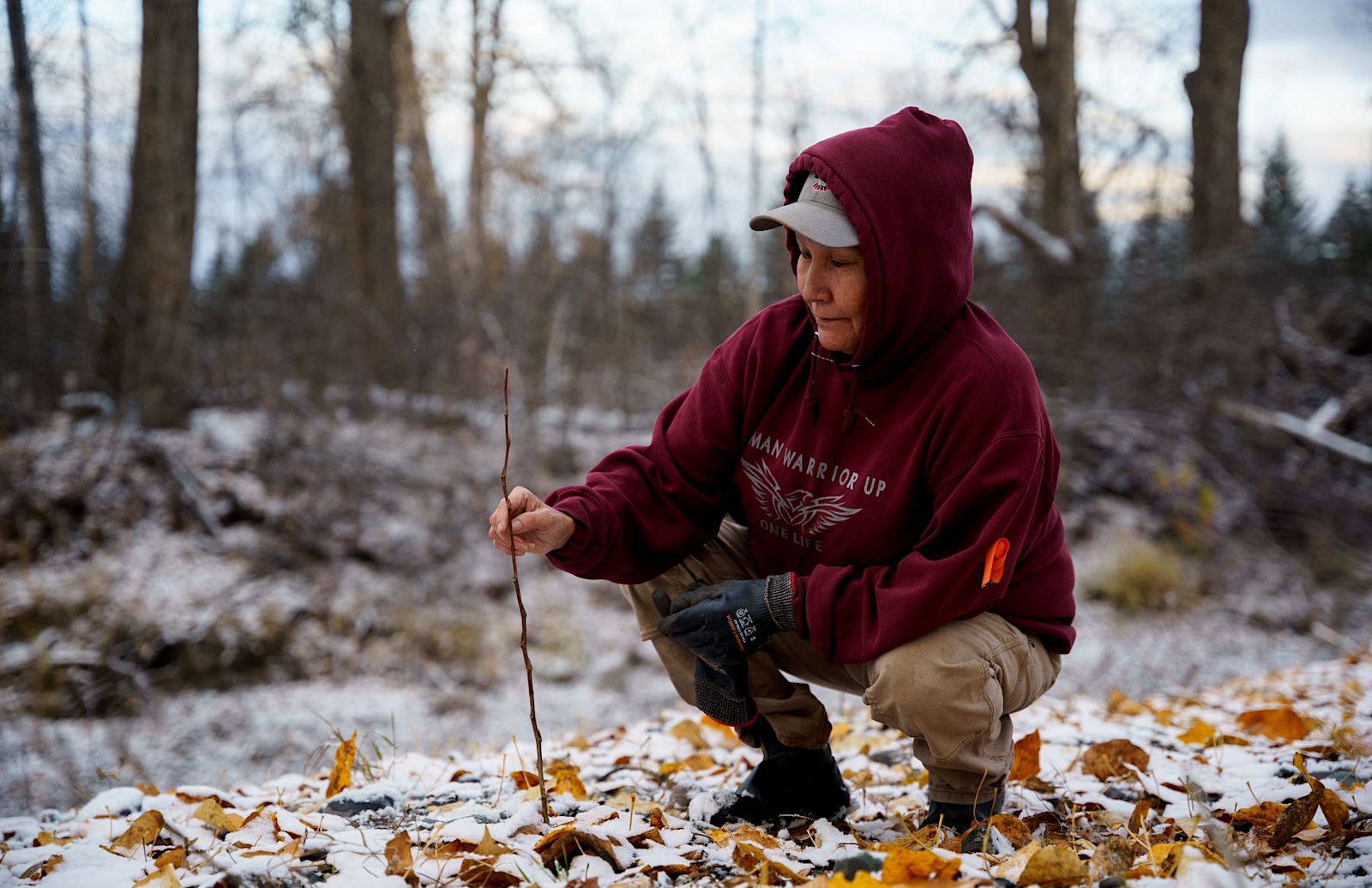
But the project’s biggest backers are the First Nations whose territories adjoin the Nechako and its tributaries: the Stellat’en, Nadleh Whut’en, Saik’uz, Nak’azdli Whut’en and Lheidli T’enneh.
“All of those nations are supportive. And I have come to appreciate that all have deeply held connections to the Nechako and adjoining river systems, and all have a long history and relationship with the cottonwoods in particular,” Werner says.
Lheidli T’enneh First Nation members are firmly behind the project, having seen the damage done to stretches of the Nechako and other rivers, not just by the dam but by land-use activities such as farming and logging that have altered water flows and resulted in increased sediment and debris washing into rivers, where it smothers salmon spawning beds and ruins habitat for juvenile salmon.
One such river is the Chilako, a tributary of the Nechako, where the Lheidli T’enneh have been working for a decade to shore up riverbanks through planting willow and cottonwood trees. In addition to growing rapidly in height, the roots of black cottonwoods are capable of growing nearly half an inch a day, a rate unrivalled by all other cottonwoods.
Georgina Joseph, a Lheidli T’enneh fisheries supervisor, said the fast-growing willow and cottonwood that she and others have planted along sections of the Chilako and Nechako are helping to recover what nation members lost from their Keyohs, the traditional areas where they once gathered berries and other foods and harvested fish.
“The river to us is very, very powerful. That’s where we get most of our food resources, like the salmon,” Joseph says. “The work that we do with cottonwoods is very important.... It does so much for everything, for the habitat, for the land.”
Domo (Dominic) Frederick grew up on the shores of the Nechako and is Lheidli T’enneh’s fisheries manager and an elected councillor. He also served multiple terms as the nation’s elected Chief.
“The Nechako is very important to our community because most of the [salmon] runs that we target go up the Nechako,” Frederick says. But for decades, Lheidli T’enneh members have been unable to fish those stocks because they were so badly depleted as a result of the dam.
The power required for aluminum-making in distant Kitimat means that up to 80 per cent of the water released goes west to spin turbines rather than east as the Nechako naturally flows. The consequences for young salmon trapped at times in nearly bone-dry back river channels has been enormous, with Lheidli T’enneh and other First Nations fighting to save fish all along the river’s course, including at Cottonwood Island Park.
“We have not been fishing the runs that come through our territory for really the last 20 years. What we’ve been doing is going west and purchasing fish from our neighbouring westerly villages to support our needs here,” Frederick says.
“That’s why we need more cottonwood. Because cottonwood grows fast,” Frederick says. “It’s a great support for the channels and for the river.”
And the work is starting to pay dividends. The Chilako’s waters are clearer than they once were and there’s salmon in greater numbers than before, Joseph says.
Losing count of the wildlife
This year, Joseph was one of many planters to sink 100,000 cottonwood seedlings into the ground from Cottonwood Island Park west to where the Stuart River meets the Nechako. In the next two years, up to 400,000 more trees will be planted.
All of that work is being made possible by a relatively modest amount of funding, with $75,000 per year coming from the Nechako Environmental Enhancement Fund, a fund that Rio Tinto Alcan agreed to contribute up to $50 million to following the signing of an agreement with the provincial government in 1997.
With that funding secured, Werner says, the project attracted another $75,000 annually from the federal government’s 2 Billion Trees program, which was created in 2021 to help organizations plant two billion trees across the country.*
With Werner’s time and the support of his colleagues in the ministry factored in, the project’s total budget is just around $200,000 per year.
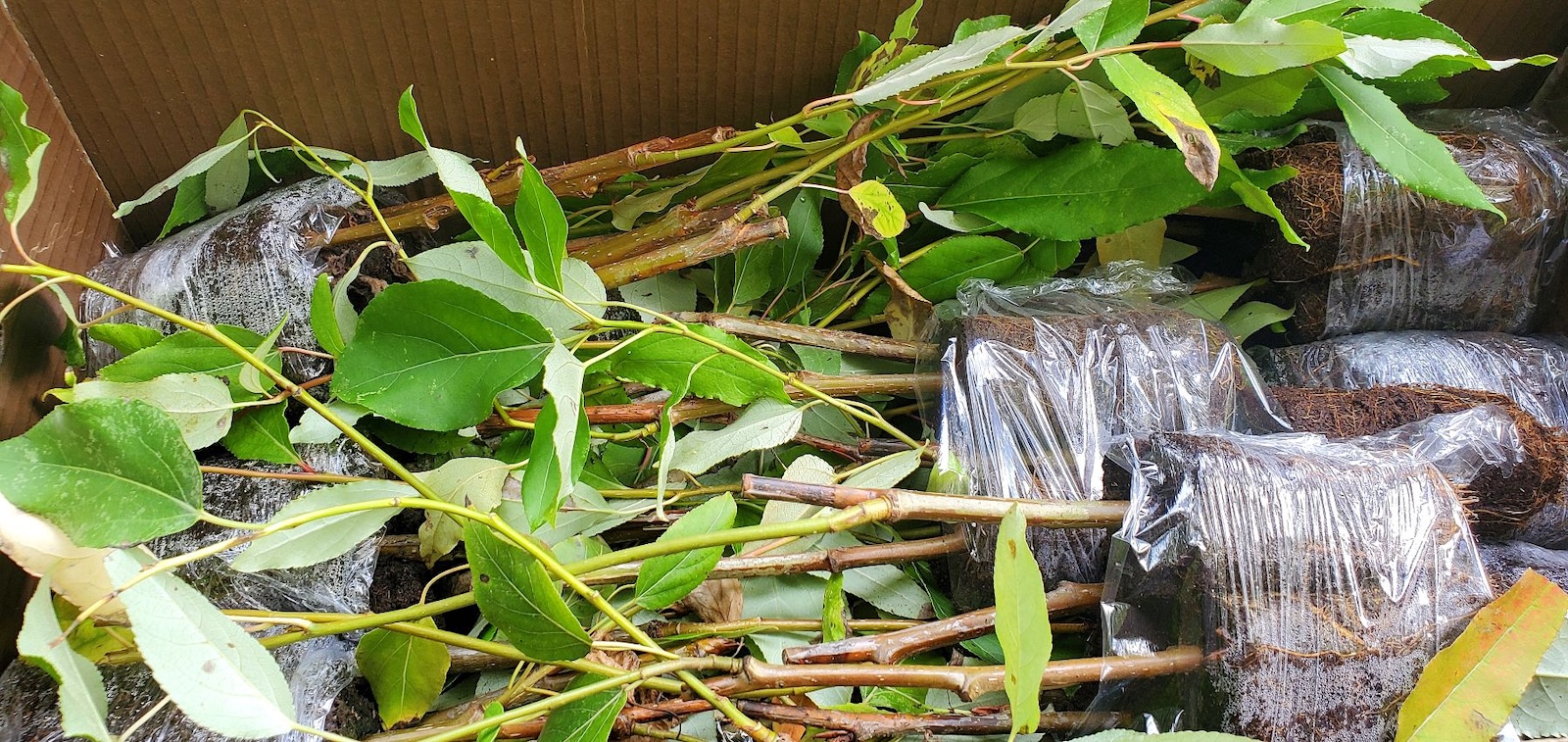
Brandon Geldart, co-ordinator of the Society for Ecosystem Restoration in Northern BC, was responsible for overseeing the planting program this year. Geldart said the project is unlike any he has previously worked on.
Planters with small allotments of seedlings had to be moved to often remote points on the river by boat — an aluminum-hulled boat, as it turned out — where they were dropped off to do the work. And the work had to be done as early as possible in the season.
“Logistically, it’s just really difficult to make sure that there’s a safety program in place and that everyone’s covered and we have communications with everybody. We’re also planting in the spring because [the trees we plant] have to outcompete the grasses that are there. So we’re planting really, really early. As soon as the snow’s off, as soon as it’s thawed, we’re out there.”
Geldart said one of the things that has inspired him is how the project has garnered so much support from Indigenous and non-Indigenous rural residents. As well, almost every day he has been in the field he has been reminded of the remarkable biodiversity that still exists in the river valley despite the environmental assaults.
“I went out in September last year to do reconnaissance for this leg, and we just parked the boat and were counting salmon going upstream. We lost count of the eagles. And the bears were coming out and eating the fish. It was amazing,” Geldart says.
Buying time
As a budding ecologist, Werner was fortunate to study at the University of British Columbia at a time when some leading lights in the field worked in its department of zoology, he says.
The list included the late Jamie Smith, who became known as “the Birdman of UBC” because of the countless students he inspired during field trips and bird studies across the province, the Yukon and Costa Rica; Charles Krebs, a professor emeritus who has devoted more than 60 years of his research life to studying the population dynamics of voles, lemmings and snowshoe hares; and professor emeritus Tony Sinclair, known for his work on the population dynamics of large mammals and predator/prey relations in places like the Serengeti in central east Africa.
All three helped found UBC’s Biodiversity Research Centre.
Ecologists, Werner says, are always shifting from the small to the big and back again. From the caribou to the forest. From fish to the river and its environs.
Ultimately, however, it is the big that counts. Too fragmented a forest means caribou herds vanish, with one vulnerable herd after another propped up for a time by shooting wolves because logging and logging roads have made it easier for wolves to do what wolves do. While too compromised a river — be it from dams or extensive resource extraction — means fewer resident fish, including endangered bull trout, and prohibitively expensive and ultimately futile efforts to prop their numbers up.
“Complex systems are reasonably good at withstanding pressures. Even pressures like habitat loss,” Werner says. “But this is where I would put this in all caps UP AND TO A CRITICAL POINT. Once those tipping points are crossed, it’s virtually impossible to reverse the damage.”
Planting cottonwoods along the Nechako may help to hold on to some of that complexity in a radically altered watershed.
“In a sense, we’re lucky because we caught this early,” Werner says. “We’re just over the next couple of decades going to start to see these big [older] trees starting to fall over.”
And when they do, the hope is that the planted trees will have grown to a height and diameter where they are performing the many important roles that their late elders did.
But Werner cautions that the planting program can take things only so far.
“The return of cottonwoods to the Nechako River system is not strictly restoration. Because the root causes of the problem, the altered river flows, remain unaddressed,” Werner says.
“Instead, we’re kind of buying time — a century, perhaps.”
At which point, it will fall to a future generation to kick-start a whole new round of planting to prop up cottonwood numbers or to find a more lasting solution to what jeopardized the vital, magnificent trees in the first place.
* Story updated on Nov. 13 at 11:10 a.m. to correct the year the 2 Billion Trees program began.
Read more: Indigenous, Environment