
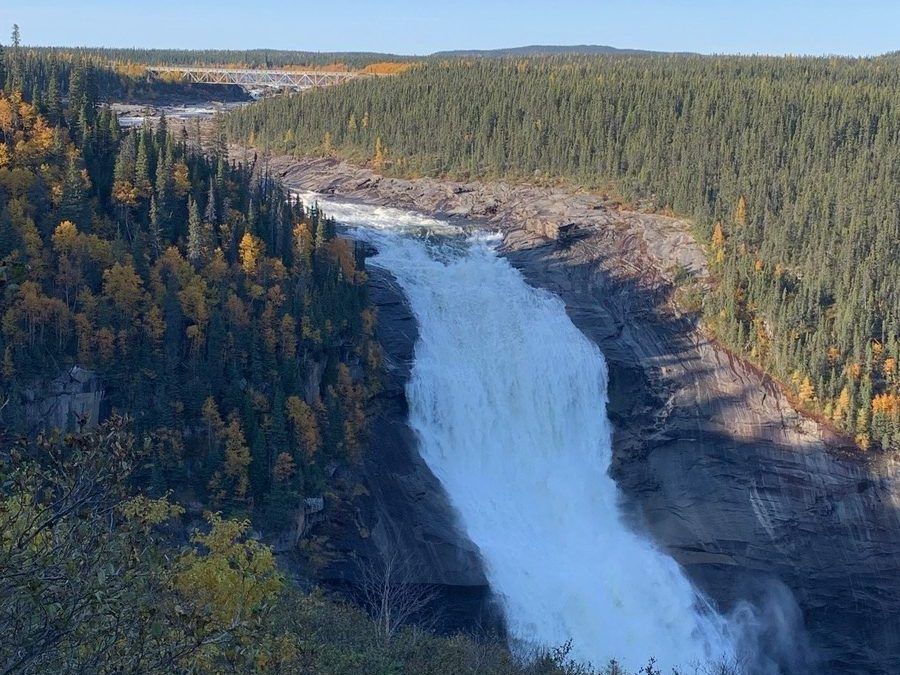
The Churchill River in Labrador stands out not only as a key provincial asset but also as a one of Canada’s major hydroelectric resources. The existing Churchill Falls power plant on the Churchill River is a uniquely valuable provincial and national asset. The Upper Churchill plant, with more than 5 gigawatts (GW) of power, has been operating since 1972, and its debt is fully repaid. The value of its output, when valued within the North American marketplace, is between $4 and 5 billion. CF(L)Co, which operates the plant is owned 34.2 per cent by Quebec and 65.8 per cent by Newfoundland and Labrador (NL).
The NL share of the market value, net of generation, transmission and other costs is between $2 to 3 billion. One of its key attributes is its low fixed and operating costs, well below one penny per kilowatt hour (kWh). The August 2026 DCIA hides the true value of the existing plant by bundling it with other developments, notably the Gull Island project whose cost will be 17 cents/kWh or more.
This post explains the impact of this unfortunate bundling process and how it takes profits and power away from us.
The report of the Independent Review Committee summarized the estimated revenues to the NL Treasury from MOU 1 (December 2024) at $36 billion in present value and 87 per cent of this amount was attributed to the existing plant, with 11 per cent attributable to the Gull Island project. This shows how significant the existing plant is and why it is the singular Jewel in our Crown.
The centerpiece of MOU 1 (the December 2024 MOU) and MOU 2 (aka the Definitive Cooperation and Implementation Agreement, DCIA, of August 17th, 2026) is the Upper Churchill plant, but both agreements include Gull Island as part of the “bundle.”
BUNDLING BLUNDER
This post deals mostly with MOU 2 and describes how it bundles Gull Island, to our detriment, with a new 51-year power contract for the existing plant.
The bundling is an important feature of the agreement, for both NL Hydro and Hydro Quebec. The actual production costs of the existing plant are far below those of Gull Island. The Upper Churchill produces power at less than a cent per kWh compared with more than 17 cents/kWh for Gull Island beyond 2035. When the DCIA was announced on August 17th, Quebec media reported that the average price, blending both Gull Island and the Upper Churchill, would be 6.2 cents/kWh, compared with 5.1 cents/kWh for power from the existing plant, on its own.
The narrow margin between the blended (with Gull) and unblended rates (without Gull) is the result of Gull Island power being cross subsidized by the huge economic rent generated at the Upper Churchill plant. This means the sacrifice of our economic rent for the benefit of consumers in Quebec. Bundling to achieve such cross subsidy is damaging to the interests of our province. Bundling hides far more of the risks of the DCIA than it reveals.
Cape Breton Eagles to file complaint with QMJHL after on-ice incident against Newfoundland Regiment
 Cape Breton
Promising football player from Halifax dies at U.S. boarding school
 Halifax
RCMP charges man following numerous crimes targeting communities in southwest Nova Scotia
 Annapolis Valley
Bobcat makes unexpected visit to Dartmouth backyard
 Halifax
Fundraiser started to support family of Antigonish County farmer who died in tractor collision
 Nova Scotia
WANTED TO MAINTAIN ACCESS
Quebec wanted to have its cake and eat it too. More than anything they wanted to maintain access to most of the power from the Upper Churchill, at rates far below market value, to replicate the 1969 contract as closely as possible. They knew that politicians in NL valued short term employment and regional economic development far more than long term benefits to the Treasury.
Quebec responded by taking an option to develop Gull Island over a 12-year period, with no binding commitment. They embellished this option by linking other blocks of power with the Gull Island project. The existing plant supplies 5.428 GW of power, less the 0.138 GW used to service the plant, for a net output of 5.290 GW. The upgrades would add 1.275 GW, for a total of 6.565 GW.
The current split of the 5.290 GW is 0.525 GW for NL Hydro and 4.765 GW for Hydro Quebec, allocating 90 per cent to Hydro Quebec and 10 per cent to NL Hydro. If Gull Island goes ahead, at its 2.700 GW capacity, higher than the 2.250 GW planned under MOU 2, then NL Hydro will receive 0.432 GW from Gull Island, 0.288 GW from upgrades and 1.630 GW from the existing plant, for a total of 2.350 GW, equivalent to 44 per cent of the capacity of the existing Churchill Falls plant, with 31 per cent coming from the existing plant itself. The allocation from the existing plant would then be three times more than the existing share. This was greeted with enthusiasm by the GNL team.
If Gull Island does not go ahead then the allocation from the existing plant will drop by 0.805 GW, which will be reallocated to Hydro Quebec, reducing our share from the existing plant to 16 per cent. The NL allocation from upgrades will drop from 0.288 GW to 0.100 GW, for a loss of 0.993 GW.
Our loss of power, if Hydro Quebec decides that Gull will not proceed, will be a gain to Hydro Quebec of the same 0.993 MW from the existing, upgraded plant. If they build the Gull Island plant, they will gain 2.700 GW, minus the 0.432 GW allocation to NL Hydro and minus the reallocation of 0.993 MW from the existing plant with upgrades, for an incremental capacity of 1.265 GW, or only 47 per cent of the full 2.700 GW capacity of Gull Island. In other words, if Hydro Quebec builds Gull Island, they get less than half of the power because the other half is recaptured or clawed back by NL Hydro, thereby doubling the unit cost of Gull Island.
What began as an incentive scheme to make the bundle attractive to NL Hydro makes it prohibitively expensive for Hydro Quebec, with a cost per GW twice that of the failed Muskrat Falls project and higher than Hydro Quebec’s alternatives, which include the Little Mécatina, whose 1.2 GW capacity would be similar to the reduced capacity of 1.265 GW which Gull Island would deliver.
COSTS ESCALATED
The costs of the Gull Island plant have escalated from MOU 1 in 2024 to 2026 MOU 2. The cost per MW is now higher and this, combined with the incentive scheme described above, makes it unlikely that Hydro Quebec would consider Gull Island to be a viable alternative.
The revenue projections of $273 billion in DCIA assume much more power is available to NL Hydro than is realistic because it takes as foundational to its “base case” Hydro Quebec’s decision to build Gull within the 12-year option period. If Gull Island does not go ahead, then the revenue projections for GNL will need to be reassessed to recognize that we will have far less power available than has been assumed and will be unable to access “premium pricing.” We will likely have inadequate power to serve domestic demand, let alone to export power. This will reduce projected GNL revenues from the DCIA.
CONCLUSIONS
Without Gull Island, power for our province must come from the existing Churchill Falls plant which is the least cost source of power available to us.
Any future Gull Island project should be a separate agreement. We do not need Gull power because the existing plant can supply our needs for generations to come.
We should not accept the risk of building Gull Island but, if it is to be built, prices should be market based and we should reap the benefit of a royalty, without allowing Hydro Quebec to expand its equity stake and control over our resources.
A careful analysis of the DCIA is needed for many reasons, not the least of which is to review the realism of the “base case”, which assumes that Gull Island will proceed, despite the incremental analysis which makes that prospect unlikely.
An analysis is needed to measure the risks we are incurring by bundling Gull Island with a renewed power contract for the existing plant. That is one of the many reasons why a transparent independent review is needed and why the promised binding referendum is essential to protect the interests of generations yet unborn.
David Vardy, St. John’s
David Vardy was trained in Economics, Political Science and Commerce at Memorial and holds post-graduate degrees from the University of Toronto and Princeton University. He taught economics at Princeton, Memorial and at Queen’s University.
As a senior public servant Vardy was a member of the team which negotiated the 1985 Atlantic Accord. He served in senior positions with GNL, including Clerk of the Executive Council, President of the Marine Institute, Deputy Minister of Fisheries and Aquaculture and Chair of the PUB. As Clerk he served as a member of the NL Hydro Board of Directors.
In 2000, he received the Gold Medal Award from the Professional Institute of the Public Service of Canada for “contributions to labour relations, economic development, resource management and education”. Nominations are made by the provinces and the Federal Government. It is a national award given on the advice of an independent panel. In 2001 he received the Lieutenant Governor’s Award for Excellence in Public Administration from the Institute of Public Administration of Canada (IPAC).
He served as a member of the Premier’s Economic Recovery Team (PERT) and more recently was a member of the Expert Panel on Churchill Falls.
David was awarded an honorary degree from Memorial to recognize his contributions to the province.
David Vardy is also a True Rotarian and a Paul Harris Fellow of Rotary International.


 Pinterest
 Tumblr