
See more Toronto Sun on Google — save as a Preferred Source
The first rule in any emergency is this: Don’t panic.
Recommended Videos
It’s a maxim politicians, union leaders and others trying to score points over the wildfires spreading across Canada should keep in mind.
Four Michigan Republican members of the U.S. Congress have complained we’re not doing enough to fight wildfires.
“We are done accepting apologies in place of action,” they said in an open letter, and suggested the U.S. could get directly involved in cross-border wildfire protection and firefighting if this country doesn’t do better.
There’s an idea. Instead of complaining, neighbours could help neighbours by sending firefighting crews across the border to help out. The U.S. could send crews to Canada when needed. And Canada could help the U.S. when they’re under pressure.
Oh, wait. Isn’t that what happens now? Didn’t Canada send crews to California last year when it was burning? Just this month, a Canadian helicopter pilot died fighting a fire in Colorado. So pot meet kettle. The U.S., it turns out, has wildfire emergencies as well.
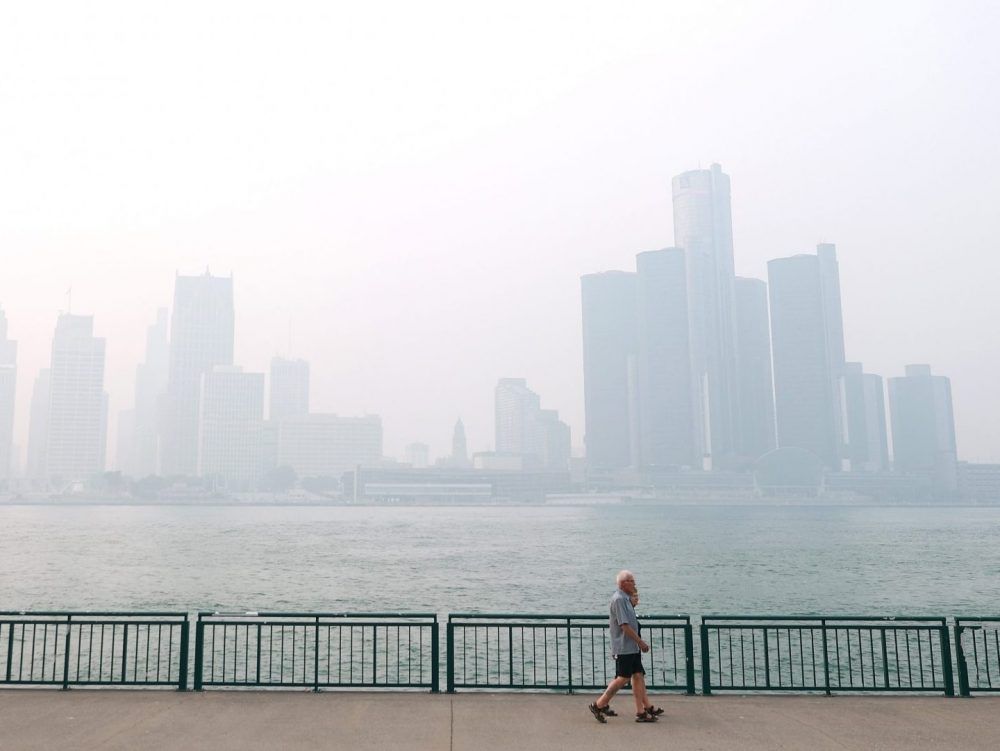
“American lungs are paying the price for Canadian inaction, year after year,” the letter said. Do they think we haven’t noticed the smoke choking our own cities?
Toronto and Chicago registered some of the worst air quality in the world this week, according to the IQ Air quality monitoring website.
Canada’s vast boreal forests present massive problems fighting wildfires. According to Natural Resources Canada, 369 million hectares of land, or 40% of this country’s landmass, is forested.
Most of that land is remote and inaccessible by road. The only way to fight the fires is by air. This is not to excuse the devastation that occurs each summer, but to understand it. But we must do better.
Smoke doesn’t respect provincial boundaries. Instead of individual provinces fighting fires, we need a national fire-fighting force active across the country. Instead, we dump the problem in the lap of the Canadian Armed Forces when things get out of control.
We should invest more in new technologies such as heat-seeking drones to provide early warning when fire has broken out in a remote part of the country.
There’s no quick fix. Finger-pointing will do nothing to help the brave folk who risk their lives every day on the frontline of the wildfires.