

On Nov. 13, Onion Lake Cree Nation will appear before the Alberta Court of King’s Bench in Edmonton for an important hearing concerning our legal challenge to Alberta’s Sovereignty Act.
There will be legal arguments made in the courtroom, about the constitutionality, infringement of treaty and lack of consultation regarding the Alberta Sovereignty Act. But beneath those legalities is a simple and fundamental principle: Treaty 6 came before Alberta, and the promises made to our ancestors must be respected and honoured.
Our ancestors entered into Treaty 6 at Fort Pitt in 1876, nearly three decades before Alberta became a province. They entered into that sacred agreement with the Crown in good faith, with the understanding that their rights, lands, way of life and ability to govern themselves would be respected in perpetuity “as long as the sun shines, grass grows and waters flow.” Those promises were not temporary. They were commitments made between nations, intended to endure for future generations.
Today, we carry the responsibility of protecting those commitments for our children, grandchildren and generations yet to come. That sacred responsibility to think about our future generations is at the heart of our why we undertook this legal challenge.
In December 2022, Onion Lake Cree Nation filed a statement of claim challenging the Alberta Sovereignty Within a United Canada Act. This legislation gives a legal gloss to the overreach of provincial authority and the circumvention of our treaty rights and jurisdiction.
Our position is grounded in Treaty 6. Our rights are recognized and protected in Canada’s Constitution, which also places limits on provincial authority. Yet Alberta expedited the passage of its Sovereignty Act without consulting First Nations, including Onion Lake Cree Nation (OLCN), or obtaining our free, prior, and informed consent, despite the act’s impacts on our treaty and inherent jurisdiction.
While Alberta still has a constitutional duty to consult First Nations when required by law, the act raises serious questions about how our treaty rights will be respected and protected.
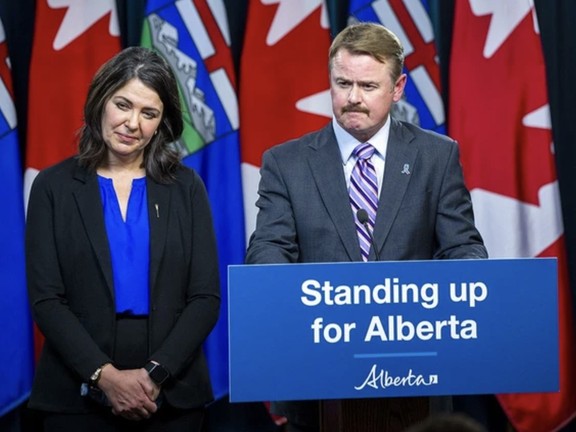
On Nov. 13, Alberta will ask the court to strike our statement of claim. And while the hearing is not a determination of underlying treaty rights, an important question remains: Why has Alberta not filed a statement of defence responding to the concerns raised in our original claim?
Instead, the province is asking the court to dismiss the case before those questions are examined on their merits. We believe these issues deserve to be heard.
There is also a concerning difference between what Alberta says publicly and what it argues in court. The province says it has taken no formal action under the Sovereignty Act. While Albertans have rejected the idea of separating from Canada, nine other questions remain under public discussion. These raise concerns for treaty nations. Alberta may argue that no formal action has been taken, but we cannot simply wait until our treaty rights are affected before speaking out.
We recognize that the Alberta government must govern and consider the interest of all Albertans, but it cannot do so by running roughshod over the rights of treaty peoples. Protecting Alberta’s interests and respecting treaty rights should never be competing objectives.
This legal challenge is not about taking sides in debates over Alberta’s political future. It is about recognizing and respecting Treaty 6, it’s about accountability, respect for the Constitution, and the rule of law. Those principles should matter to every Albertan.
As we prepare to enter the courtroom, our message remains clear: Our ancestors secured our rights and jurisdiction through Treaty No. 6, and those commitments made to our ancestors must be respected and honoured.
Okimaw Pete Chief is chief of Onion Lake Cree Nation, an independent Treaty 6 Nation located along the Alberta–Saskatchewan border.
Letters welcome
We invite you to write letters to the editor. A maximum of 150 words is preferred. Letters must carry a first and last name, or two initials and a last name, and include an address and daytime telephone number. All letters are subject to editing. We don’t publish letters addressed to others or sent to other publications. Email:
Bookmark our website and support our journalism: Don’t miss the news you need to know — add EdmontonJournal.com and EdmontonSun.com to your bookmarks and .
You can also support our journalism by becoming a digital subscriber. Subscribers gain unlimited access to The Edmonton Journal, Edmonton Sun, National Post and 13 other Canadian news sites. Support us by subscribing today: The Edmonton Journal | The Edmonton Sun.