Saskatchewan Premier Scott Moe is hailing Prime Minister Mark Carney’s deal with China as a “great day for Canadians,” which he thinks will be a net positive for the Canadian economy moving forward.
Carney secured a so-called “strategic partnership” with Chinese President Xi Jinping during his trade mission to Beijing this week, which both paves the way for a significant reduction in damaging tit-for-tat tariffs and aspires to eventually increase overall bilateral trade between the two countries.
“I think it’s a great day for Canadians,” Moe said in an interview airing Sunday on CTV’s Question Period.
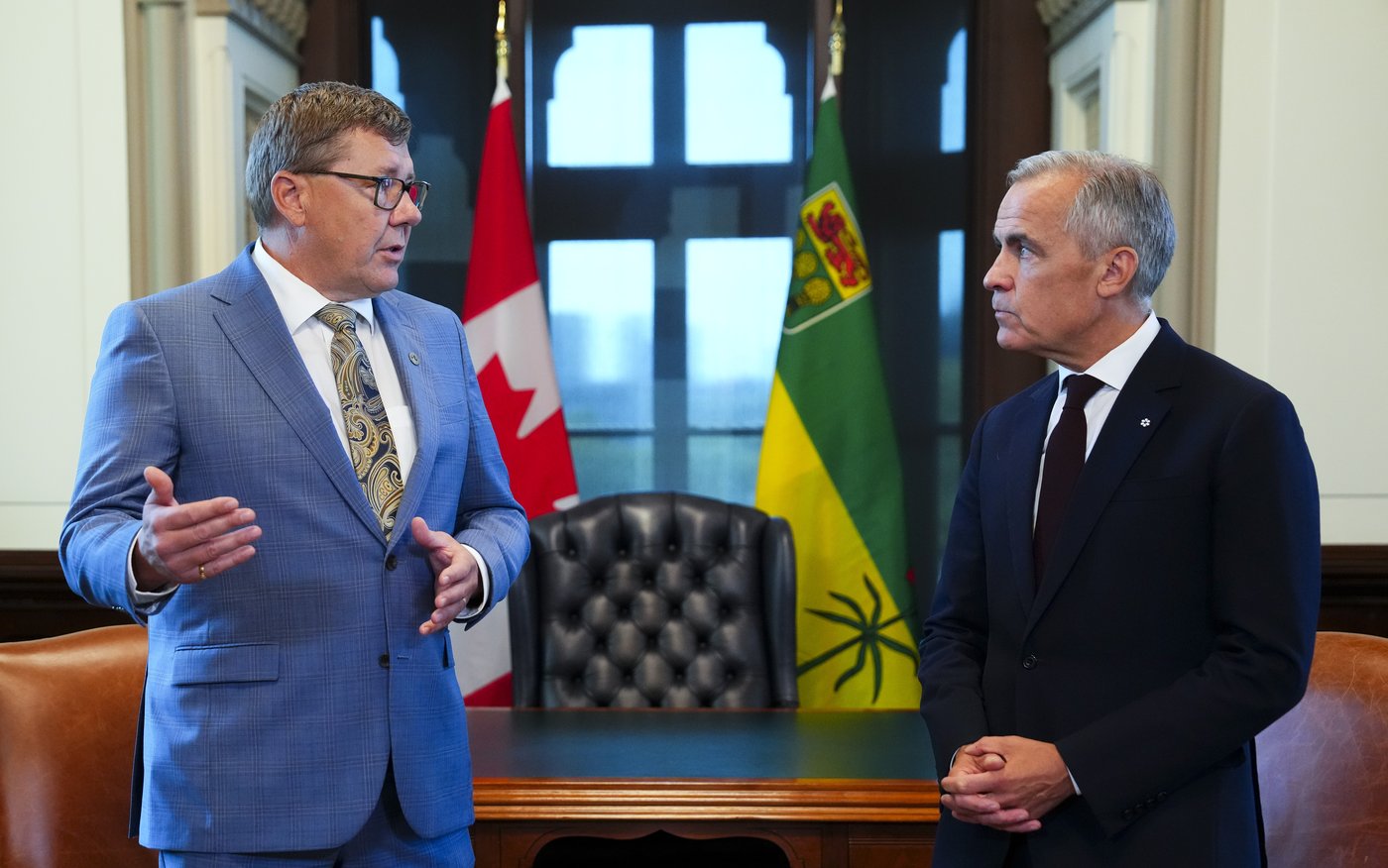
“Notwithstanding some discussions that I’m sure we’ll have in the next number of days and weeks, but all in all, it is going to be a net positive for the Canadian economy and (it’s) going to provide us some opportunities to really engage on what our future looks like over the next five, 10 and 15 years,” added Moe, speaking with host Vassy Kapelos.
Under the new deal, China is promising to significantly lower its tariffs on Canadian canola products and other agricultural goods. In exchange, Canada will allow up to 49,000 Chinese-made electric vehicles (EVs) into the Canadian market at a marginal tariff rate.
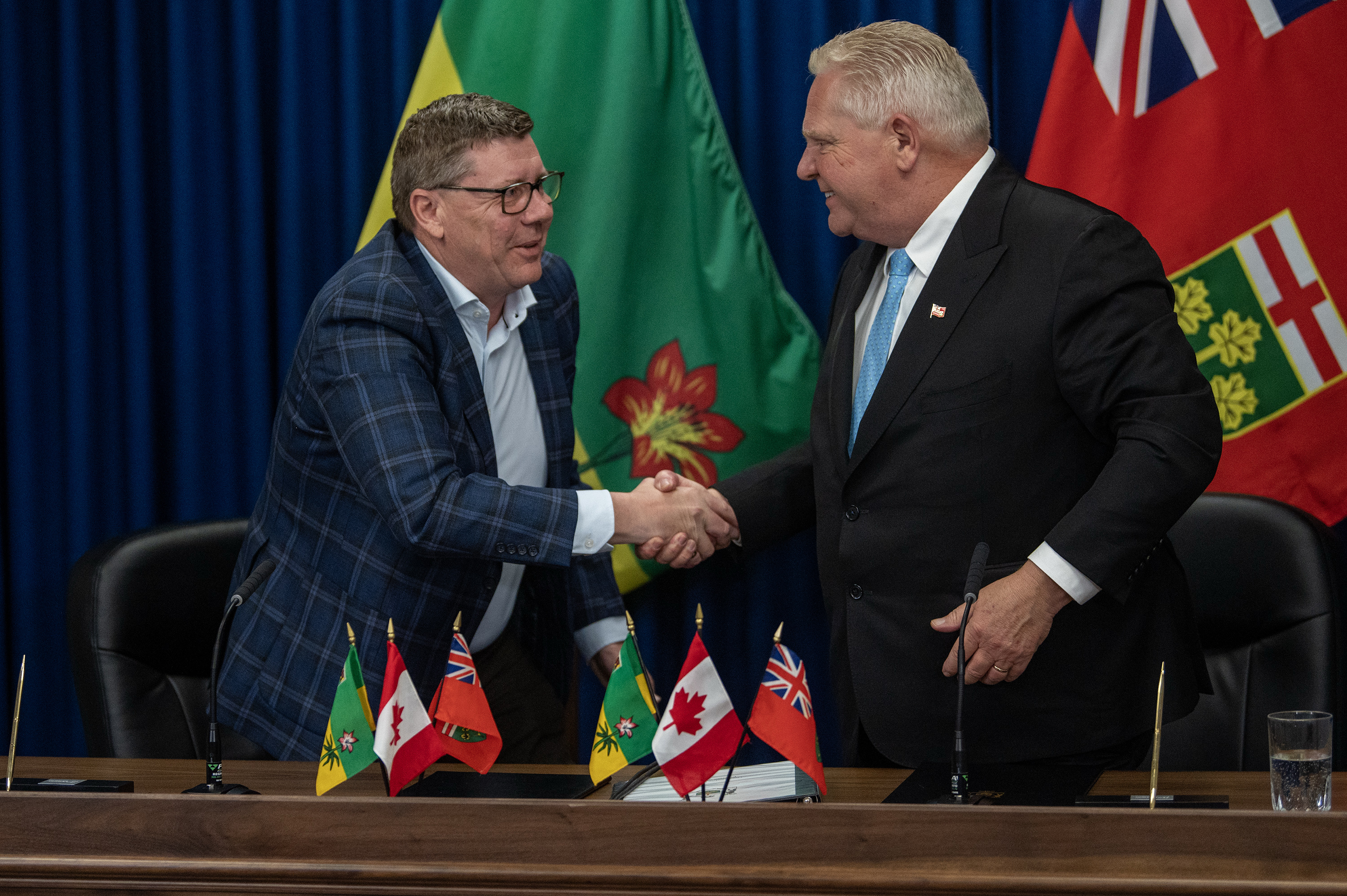
While Moe is celebrating the new deal, his counterpart in Ontario is decrying the agreement as a “terrible, miscalculated decision by the prime minister.”
“We’re letting China into a market that’s going to have lower tariffs than our largest market – the U.S. – and I don’t think that’s going to go over too well with (U.S.) President (Donald) Trump,” Ontario Premier Doug Ford told reporters Friday. “It’s going to hurt every single auto manufacturer, every single supply chain that has anything to do with the auto sector.”
“This was not thought out properly,” he added. “It wasn’t consulted. It was a knee-jerk reaction, as far as I’m concerned, and this is going to be a big, big problem.”
Reaction to the agreement out of Washington was mixed on Friday. U.S. President Donald Trump described it as “OK,” but his top trade representative Jamieson Greer called it “problematic.”
The premiers of Alberta, Saskatchewan and Manitoba have been lobbying the federal government to lift its tariffs on Chinese EVs for months, in the hopes Beijing would make good on its promise to ease its levies on Canadian agricultural goods in exchange.
Those Chinese tariffs have been particularly harmful to Canada’s canola industry, with the Canola Council of Canada estimating that canola exports to China plummeted by more than 50 per cent in 2025.
“The agriculture industry, the canola industry, the oil seed industry, the pulse industry, is important to virtually each and every part of this country, up to and including Ontario,” Moe told Kapelos.
Moe also pushed back on Ford’s characterization of the impact the new deal will have on Ontario’s auto industry.
“It’s 49,000 EVs,” he said. “That’s about what was imported into Canada last year, so less than three per cent of our auto market. And in exchange for that, we are able to have access for literally billions and billions of dollars of various agricultural products, seafood products and others.”
“The vast, vast majority of autos coming from China are still going to be subject for the foreseeable future to that … significant tariff,” Moe added.
Carney’s mission to China is part of the federal government’s efforts to diversify Canadian export markets away from the United States as the trade war drags on.
You can watch Saskatchewan Premier Scott Moe’s full interview on CTV Question Period Sunday Sunday at 11 a.m. ET.