
Posted January 18, 2026 5:55 pm.
Last Updated January 18, 2026 7:00 pm.
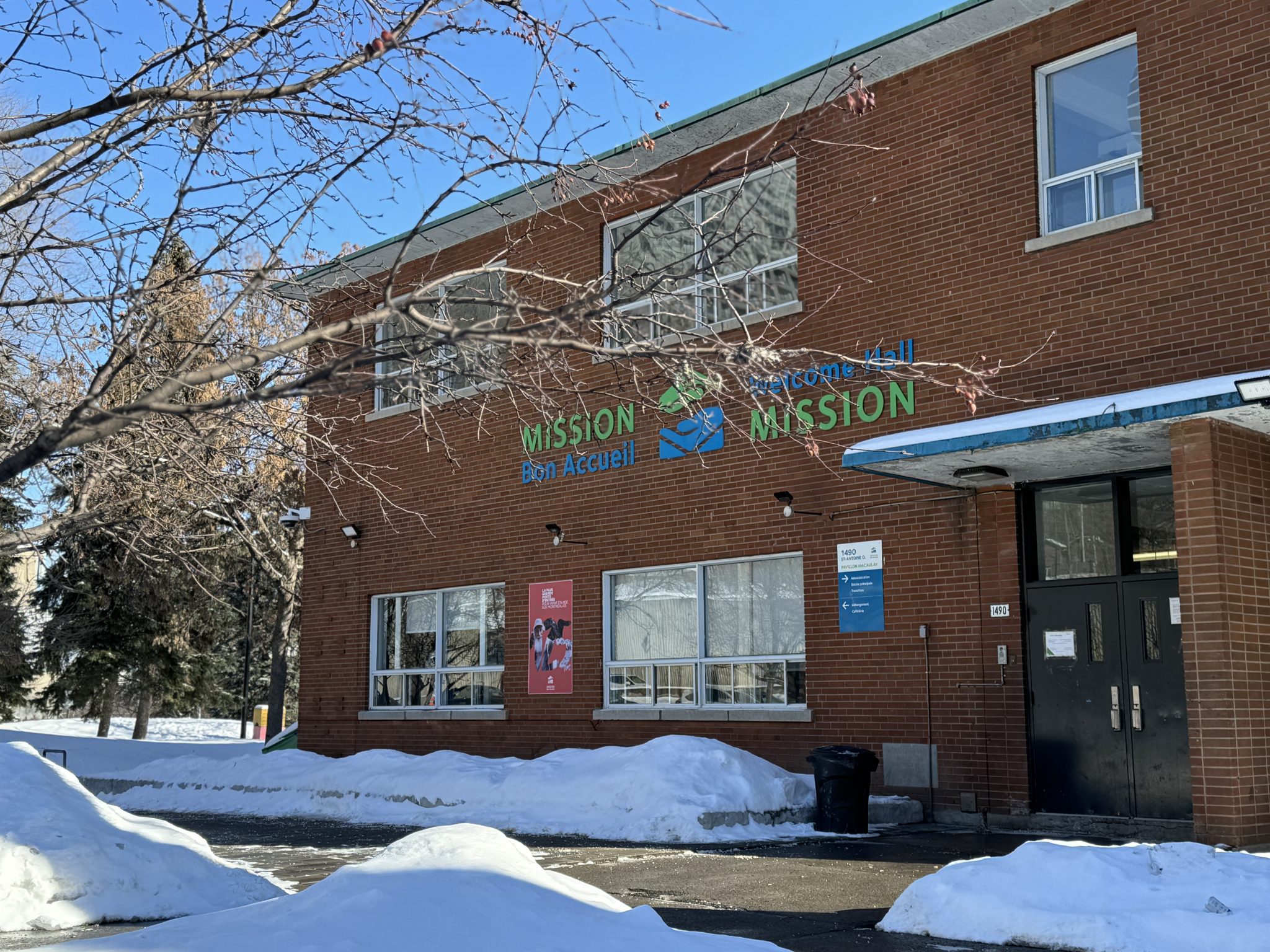
Welcome Hall Mission’s Homelessness Mental Health Reaffiliation Project (PRISM) to address gaps in services for people facing mental illness and chronic homelessness, is drawing national recognition.
The PRISM program, a shelter-based service, builds two-to-three monthslong individualized treatment plans for affected individual to help them secure permanent housing and long-term care.
For the time being, it has caught the eye of David S. Heath, a retired psychiatrist from Waterloo, Ontario, renowned for his work specializing in intensive home treatment or alternative hospitalization for patients with acute mental disorders.
But Samuel Watts, CEO and executive director of Welcome Hall Mission, said community organizations in Toronto are also interested in adopting PRISM’s approach due to its effectiveness.
A study led by psychiatrist and director of the PRISM program Vincent Laliberté and his team, that surveyed more than a thousand former PRISM users — conducted between November 2023 and May 2019 — found that 63 per cent were housed when they left the program, and 85 per cent were connected to outpatient community support.
Jeff Shoer, a former beneficiary of the PRISM program, said the program helped him succeed in ways he never imaged.
“Someone once told me that when a door closes, a window opens. But in this case, a lot of new doors opened for me for a brighter future, so I’m very grateful for that,” Shoer said.

Since he finished the program in 2021, Shoer says he’s not only been able to maintain permanent housing, but has also been able to accomplish many of his goals like speaking at press conferences, writing printed articles and being a on television advertisement. He’s also secured a full-time contract writing for a client.
“I honestly don’t think I would have gotten where I am now, as cliché as that sounds,” he added.
The program’s success is due to its comprehensive approach, says Heath.
“PRISM provides exactly the equivalent of hospital treatment, sophisticated drug treatment, plus also they get a lot of their social needs met,” said Heath.
Heath said he was intrigued by PRISM co-founder Olivier Farmer’s approach of “psychiatric hospitalization in the community.”
“It’s like intensive home treatment in a shelter,” he added.
Watts said the PRISM was an experiment in bringing services to someone in their own setting.
“The thought was that, ‘hey, if you could stabilize somebody for a period of time in the environment within which they already find themselves and then if that stabilization could lead to a trajectory towards housing, which was supported by outpatient services, I wonder if two things might happen. Would it be better for the individual? And it would be, would it be less costly for the institutions involved?’” Watts explained.
“And it turns out both are true!”
According to Watts, PRISM has since gained a solid reputation within the province of Quebec.
“It has become effectively accepted as medical best practice for people experiencing homelessness to stabilize the community, help them get back into permanent housing, and treat them robustly as an outpatient,” Watts said.
As for its future in Toronto, Heath says he’s begun discussing the idea of replicating the program with Peter Martin, a housing solutions manager with the Toronto Alliance to End Homelessness.
He is a former lawyer who was homeless from a mental breakdown through PTSD, who has expertise in housing and networking with different agencies, says Heath.
He said that once he and Martin have steered their way through gathering local interest, they’ll then move on partnering with a shelter that can fund a dedicated space to reproduce PRISM.
“We haven’t even got to first base yet,” said Heath, adding that he is hopeful things would fall into place in six to 12 months.