
Posted July 17, 2026 2:32 pm.
Last Updated July 17, 2026 2:44 pm.
As more than a third of Quebecers are expected to travel during the construction holiday, the high gas prices are expected to climb even further.
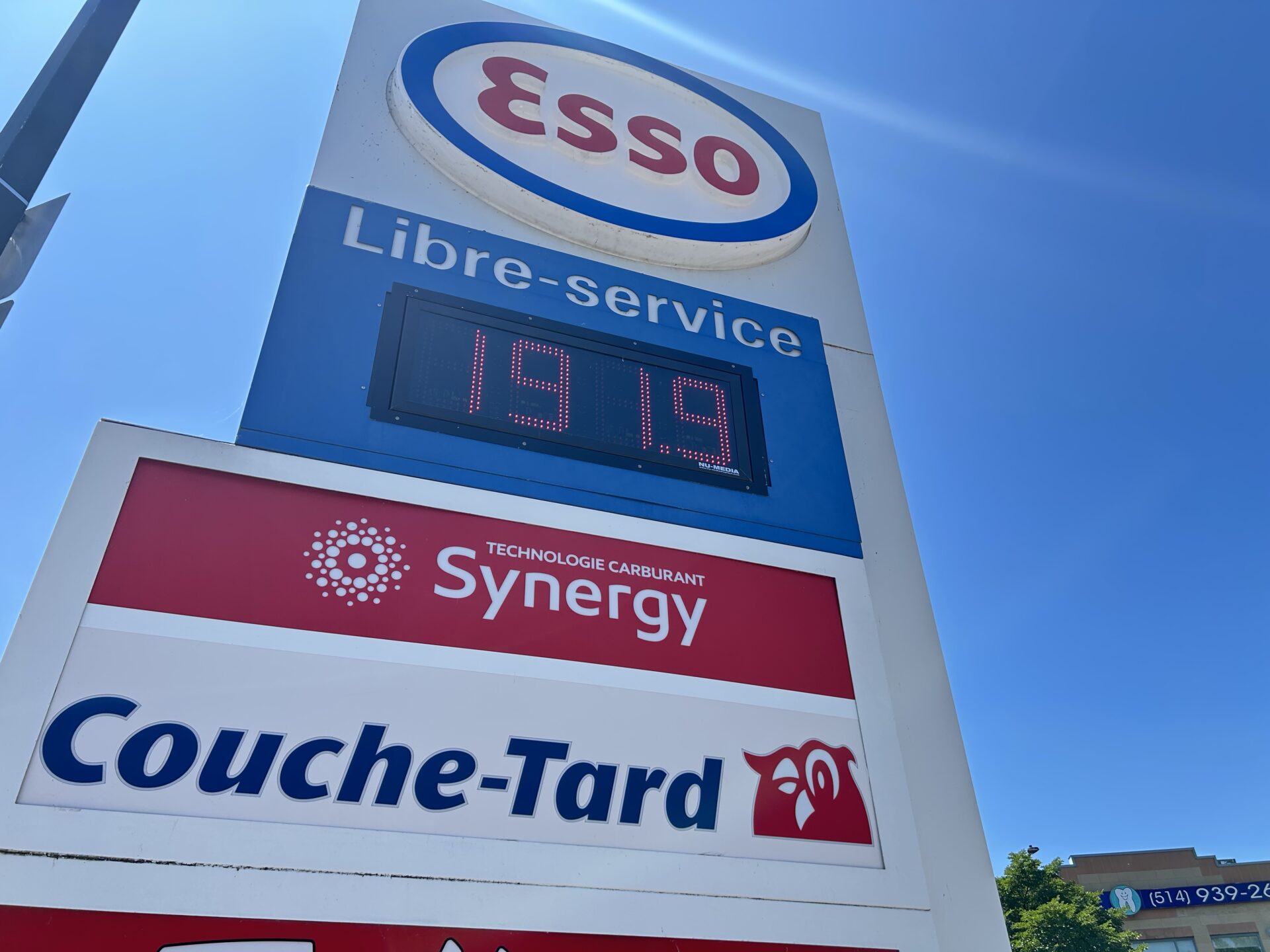
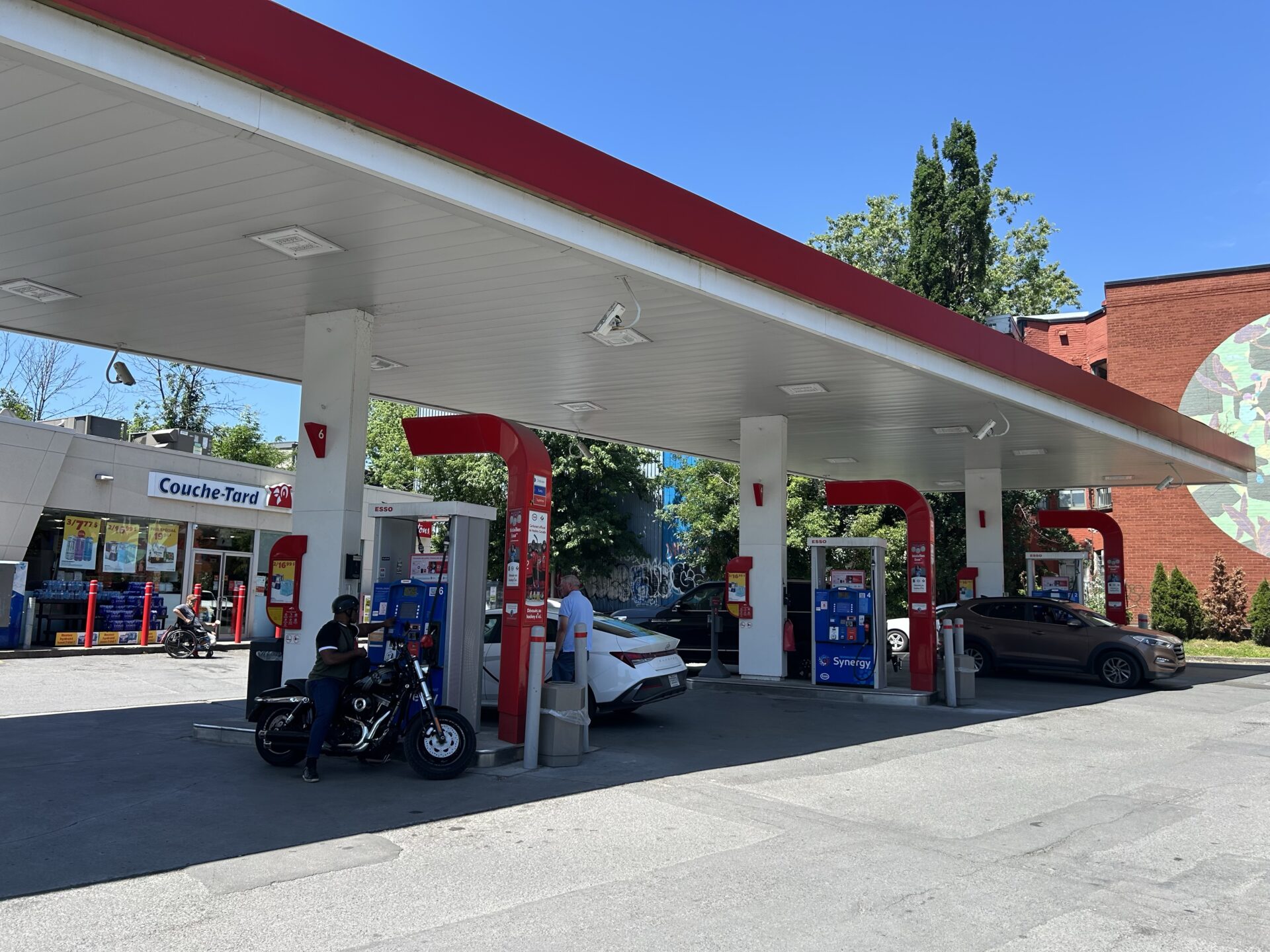
In Montreal, the price of gas at an Esso station on Atwater Avenue was at 191.1 cents per litre Friday, climbing more than 10 cents in a week, according to data tracked by GasBuddy. Prices above the 190-cent mark has not been seen since May.
Experts warn that they could go up by 20 cents more per litre by early August.
The sharp increase comes amid renewed hostilities between the U.S. and Iran after the two countries accused each other of violating the ceasefire agreement, especially, about the passage of commercial ships through the Strait of Hormuz.
Over the last couple of weeks, the U.S. has reinstated its sanction on Iranian oil and has blockaded ships from leaving Iran.
The rising tensions caused the Brent crude prices rose sharply to US$81 per barrel on Monday after weeks of staying under the US$80-mark. The index closed the week at US$83.27 on Friday.
Price decline reversal
The price rise also reverses the trend of lowering gas prices over the last several weeks during the short-lived ceasefire agreement between the U.S. and Iran.
The gas price decline in June after the a spike in spring is expected to pull the annual inflation rate back below three per cent when Statistics Canada reports fresh price data on Monday.
A Reuters poll of economists expects inflation fell to 2.9 per cent in June from a recent high of 3.2 per cent in May, according to LSEG Data & Analytics.
Economists at Royal Bank of Canada are a bit below that poll and expect inflation to ease to 2.8 per cent in June.
“Outside of more volatile components, inflation pressures are expected to remain broadly stable,” wrote RBC’s Nathan Janzen and Abbey Xu in a note to clients Friday.
Benjamin Reitzes, managing director of Canadian rates and macro strategist at BMO, said a 10 per cent drop in pump prices last month puts his inflation forecast right in line with the consensus.
Inflation risks with higher prices
Reitzes said gas prices are not yet back to the highs seen over the spring, but the resurgence is a risk to the inflation outlook. The headline inflation rate could rise again in July after the expected dip in June, he warned.
“There’s a lot of unpredictability around what’s going to happen with the Middle East. Energy prices could still go higher, that could re-spark more inflation,” Reitzes said.
The Bank of Canada held its benchmark interest rate steady at 2.25 per cent for a sixth consecutive time on Wednesday.
Officials warned in an updated monetary policy report that the ongoing Middle East conflict means the inflation forecast is still highly uncertain.
The central bank expects the energy price shock will continue to fuel inflation through early 2027 before cooling back toward its two per cent target.
The Bank of Canada is seeing few signs so far that inflationary pressure from the Iran war is spilling over into other parts of the consumer basket. A soft economy is holding back many businesses from passing those higher costs on to consumers, the central bank noted this week.
Reitzes said if there are signs in the inflation data that more price segments are rising faster than three per cent, that would catch the attention of monetary policymakers.
“Broad-based spreading of that pressure is what they’re really worried about,” he said.
“The sector that is most susceptible, most vulnerable to higher inflation, would probably be food prices.”
Consumers are more likely to see the impacts of the Iran war at the grocery store because fresh food prices are sensitive to higher fuel and shipping costs.
Food inflation accelerated to 3.8 per cent in May, up from 3.5 per cent the month previous. Janzen and Xu said that they expect food inflation to “remain firm” at 3.6 per cent in June.
Reitzes said one area where inflation is continuing to cool is in shelter, where slowing population growth is helping to rein in housing costs.
There were signs the sluggish housing market might have bottomed out in June, Reitzes said, which suggests prices may be stabilizing in the sector. But he said he’s not worried about pressures ramping up again anytime soon.
“Stable, low shelter-related inflation — that should be a positive for the Bank of Canada, that should be positive for Canadians and help keep overall inflation somewhat contained,” Reitzes said.
The Bank of Canada will get a look at inflation data for both June and July before making its next interest rate decision on Sept. 2.
