
Posted January 18, 2026 12:45 pm.
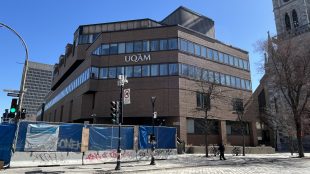
Community outreach work is often directly associated with community networks and non-profit organizations. The skills of those involved in this field and their career prospects are often overlooked, according to Isabelle Ruelland, associate professor at the School of Social Work at the University of Quebec in Montreal (UQAM), who explains that community outreach work and its evolution are poorly documented.
However, since the COVID-19 pandemic, community outreach work seems to be becoming more professional.
Ruelland is a former researcher with the Quebec health and social services network. For the past four years, she has devoted her research to various citizen and community initiatives and their impact.
The professor and her team sought to document the various citizen initiatives that arose from a concern for others, a desire for mutual aid among neighbors, and the way in which this dynamic of local solidarity developed.
“What we saw throughout the pandemic and post-pandemic was a desire on the part of public health and social services networks to integrate, institutionalize, and draw inspiration from these initiatives in order to make them more sustainable practices in terms of reorganizing local community services,” explains Ruelland, contextualizing the origins of her study.
In Quebec, numerous citizen initiatives emerged during the pandemic. According to Ruelland’s observations, these initiatives developed to compensate for the lack of services and access to resources, whether information, literacy, or health care.
In some southern countries and fragile welfare states, Ruelland has noticed that it is common for community actors to be targeted to become community health workers who can convey public health messages and raise awareness among populations about the services and resources that exist in the community.
“In Northern countries, whether in Northern Europe or Quebec in particular, these actors who are involved in their communities and who can convey public health messages have never really been mobilized outside of community, associative, and non-profit settings,” notes Ruelland.
In her research, Ruelland defines citizen work as “the integration of non-professionals who have experiential knowledge of their community, but also territorial knowledge, which is put to good use in interactions that often involve door-to-door visits or a benevolent presence in public places (…) to reach out to people and share with them the resources and levers that exist to assert their rights to local health care.”
Since the pandemic, the role of these community workers has changed significantly. Efforts are being made to make their jobs more permanent, and we are seeing greater professionalization, which is changing the way public health and social service networks operate.
“They are being told that they now need to mobilize citizens and reach out to those who play a significant role in the community. Now, you are going to make them your colleagues who will work with you on a daily basis, and they will have a specific, contractual, very spontaneous role,” explains Ruelland.
This professionalization is practical in a crisis context, according to Ruelland. However, it will require greater adaptation and recognition in order to continue and prepare for new crises, whether climatic or health-related.
“There are many questions to be asked, particularly with regard to respecting the dignity of these citizens and their working and employment conditions,” says Ruelland. “We need to think long-term about their place in the organization of local public services.”
An international reflection
Last summer, a discussion forum organized by Ruelland and her team was held at UQAM to discuss the place of citizen work in society. Researchers from Quebec, France, Belgium, and Brazil were in attendance. Some community stakeholders and health and social services network managers also participated.
The forum provided an opportunity to pool different research projects and share experiences on the evolution of local solidarity networks and the progress of community-based citizen work.
“We reflected together on the importance of considering these practices from a career and development perspective,” said Ruelland. “This is so that these individuals can find a place in relationship-based professions, receive training, and have their dignity and knowledge recognized to their full potential.”
Ruelland emphasized the role of these community actors who perform relational and often informal tasks.
“It is often because they are not health and social service professionals that they are able to reach out to people who really need it,” Ruelland points out. In addition, the researcher reveals that citizen workers and outreach workers who go door-to-door are often multilingual.
“They speak several languages because of their life experiences and migration backgrounds, and this knowledge, which is extremely valuable for reaching people who are very distant from public health services, is often seen as an additional asset and is not recognized or valued,” she explains.
Ruelland noted that researchers from different countries agree that there is a real challenge in maintaining informal relationships in community-based practice, where many people are distrustful of the public health system, while at the same time enabling workers to gain professional recognition.
“This is something that transcends borders and has enabled us to work together for several years to address these challenges and better recognize these practices,” concluded Ruelland.
Creation of comic strips
The organization of this forum also provided an opportunity to work on the production of two comic strips created in collaboration with citizen workers who were able to share their experiences, expertise, and diverse life stories.
The first, “How’s it going? Raising awareness door to door,” was created by illustrator Carolina Espinosa and recounts the actions of a citizen awareness brigade in Laval. The second, entitled “Les Super voisines” (The Super Neighbors), was created by Aglaë Brown, a bachelor’s student in visual and media arts at UQAM, and is based on various case studies conducted by Ruelland’s research team.
According to Ruelland, the creation of these two works has two distinct objectives.
The first is to reach out to the workers concerned so that they feel understood and recognized through reading.
“The goal is for it to become a tool to promote and highlight the importance of decent working and employment conditions, and above all to recognize the importance of their daily practice for future crises,” says Ruelland. “But also to affirm the right to health for all in neighborhoods where people are not even aware of the resources that exist.”
The second objective sought by Ruelland’s team is to highlight the experiences of those working in this field. To show the difficulties they face in terms of working and employment conditions, but also the micro-discrimination and stigmatization they may experience.
Ruelland adds that the comic strip also aims to highlight “the magic and richness of this work, which is based on knowledge and expertise that I would describe as very unique and human.”